Oil, Water, and Overhead Projectors: The Analog Light Show Making Screens Look Boring
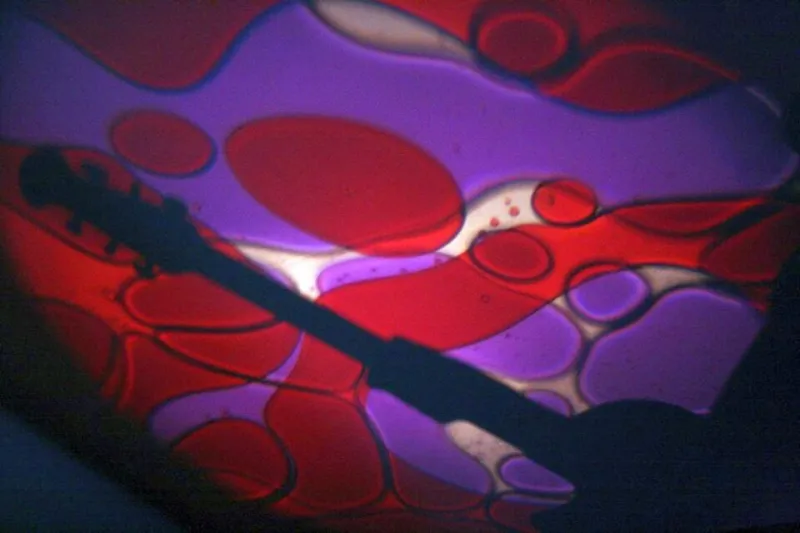
Photo: _TheNightWatch_, CC BY 2.0, via Wikimedia Commons
There's a particular kind of irony that only makes sense to people under thirty: the most sought-after visual act at independent music venues right now is a person standing behind a machine designed for displaying math transparencies in 1965, pouring dish soap into a glass dish.
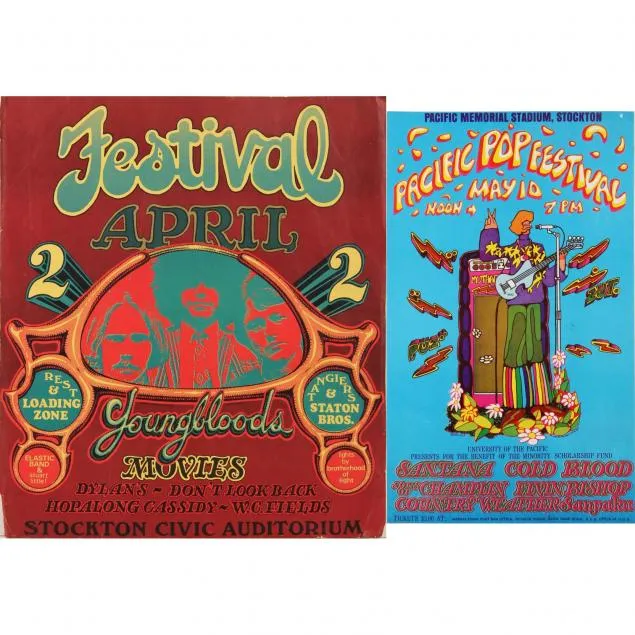
Liquid light shows — the oil-and-water projection technique that soundtracked the Fillmore and the Avalon before anyone had heard of a music video — are back. Not as nostalgia, but as a genuine youth movement. And the people driving it grew up with better screens than any generation in history. That's not a coincidence. It's the whole thesis.
The Discord Is Cooking
The revival lives in servers you can't find on a marquee. Thousands of young projectionists trade recipes the way old heads once traded tape reels: ratios of glycerin to water, which brands of ink bloom best, how to keep a dish alive through a three-hour set without it congealing into soup.
The vocabulary is its own thing. A "cell" is your projection dish. A "pull" is dragging a comb or fork through the oil to stretch the pattern. Beginners post phone videos of their first successful bloom and get back a wall of encouragement and unsolicited viscosity advice. It is, in the most literal sense, a fluid community.
Your Starter Kit, Under $200
Here's the beautiful part: the barrier to entry is a trip to Facebook Marketplace.
- Overhead projector ($30–$80): Schools have been dumping these for decades. Any working unit will do; brighter is better.
- Glass dishes or petri dishes ($15): Pyrex casserole dishes work fine. Avoid plastic — it warps.
- Baby oil or mineral oil ($8): The base medium.
- Ink, food coloring, and liquid watercolors ($20): Your pigment loadout.
- Dish soap, glycerin, rubbing alcohol ($15): For breaking surface tension and creating movement.
- Tools — combs, forks, pipettes ($20): For pulls and detail work.
That's it. Less than the cost of a decent monitor arm, and you're in the light show business.
The Case Against Perfect Pixels
Ask the revivalists why they bother, and the answer circles back to one word: stakes.
A screen renders the same image every time. A liquid light show exists exactly once. The oil moves according to physics, not code — heat from the projector lamp, the tremor of a hand, a bass note thumping through the table. No two performances can ever be identical, and the artist is in dialogue with the medium rather than in command of it.
There's also the matter of liveness. When the projection is happening in the room, on the wall, made of real fluids a few feet from your face, your brain reads it as an event rather than content. The blur isn't a limitation — it's the point. Screens have trained us to consume images at maximum resolution and zero risk. Liquid light is all risk, gloriously low resolution, and impossible to pause.
The Old Guard Approves
The projectionists who worked the ballrooms in '67 and '68 have noticed the kids coming. Some are teaching, sharing techniques that were never written down because the scene assumed it would last forever. It didn't — and now, fifty-some years later, it's starting again, one thrifted overhead projector at a time.
The medium survived the digital revolution by being impossible to digitize. That's either an accident of history or the most durable art form in America. Either way, the dishes are mixing.