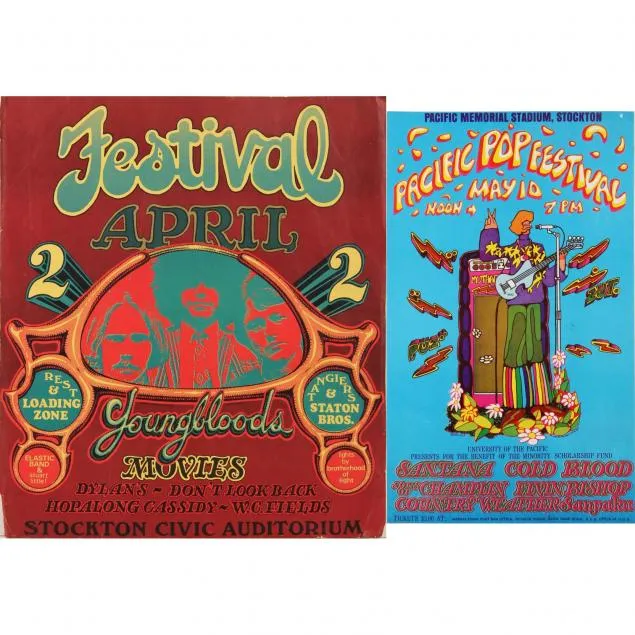
Cardboard Box, Meet Cosmic Truth: I Subscribed to Six Psychedelic Art Clubs So You Don't Have To

Photo: Miscellaneous Items in High Demand, PPOC, Library of Congress, Public domain, via Wikimedia Commons
I have, at this moment, a stack of mailers in my hallway that would embarrass a small record store. Six subscriptions, one season, and a bank statement I'd rather not discuss. Somewhere in that pile is a hand-pulled print I'd genuinely hang in my living room. Most of it is not that.
Subscription boxes have colonized every hobby on earth, so of course they got to psychedelic art. In 2026 there are dozens of them operating in the US alone — print clubs, mystery merch crates, zine bundles, "visionary" discovery boxes that ship a different artist every month. Prices run from about $22 to $95 a month, and the marketing copy is uniformly cosmic: limited edition, hand-curated, portal, journey, transform.
So let's actually open some.
The Pitch vs. the Box
The pitch is always the same fantasy: a stranger with impeccable taste sends you something you didn't know you needed. Occasionally that's true. Usually what arrives is a tube, a sticker, and a card explaining that the sticker is art.
I sorted the six services I tried into three archetypes, because the brand names barely matter — the structures repeat across the whole market.
The print club. Flat rate, one print per month, promised edition size, named artist. This is the highest-ceiling category and the highest-variance one. When it works, you end up with a signed, numbered screenprint on decent cotton rag stock, carefully rolled in kraft paper with tissue and a stiffener tube. When it doesn't, you get an open-edition digital print on glossy paper that's already curling in the corners.
The mystery crate. Merch-forward: enamel pins, patches, socks, a bandana, maybe a small print. Fun to open, hard to keep. After four months I owned three enamel pins shaped like mushrooms and no idea where any of them came from.
The zine box. My favorite category and the most underrated. Small-press publications, risograph prints, comics, sticker sheets, sometimes a weird little riso poster that feels handmade because it is. Lower production values, way higher hit rate on actual discovery.
What the Money Actually Buys
Here's the uncomfortable math. A $45 monthly box has to cover the art, the packaging, the shipping, the platform fee, and the margin. If you're paying $45 and the shipping alone is $9, the print inside is doing well to be worth $15. That's fine if you're paying for the surprise and the curation. It's a bad deal if you're paying for a $15 print you could have chosen yourself.
The boxes I'd keep come down to one question: is the artist getting paid properly, and is the work something I couldn't have found on my own? Several services publish a monthly artist feature and split revenue. One I tried clearly buys overstock at wholesale and boxes it. Both cost the same. Only one is a relationship.
The Clutter Test
After a season I developed a rule I'll pass along: if a box item doesn't earn a place within thirty days — hung, worn, framed, or actively used — it was clutter the second it shipped. Run every shipment through it. The number of items that survived from my six boxes was approximately a third of the total volume, and I'm being generous to myself.
That's the real cost of a subscription. Not the monthly fee. The square footage.
The Practical Checklist Before You Subscribe
Run this against any service before you hand over a card:
- Is the print signed and numbered? If yes, what edition size, and is that number stated before you buy or after?
- What's the paper? Cotton rag, heavy matte, or smooth coated? Coated glossy is fine for posters and bad for collectible prints.
- Who's the artist, and do they know about it? A named artist with a stated revenue split is a green flag. "Curated by our team" with no names is not.
- Is there a preview? Services that will tell you next month's theme before you're charged are more confident in their curation.
- How does it ship? Prints should travel in a rigid tube with an inner sleeve. Anything folded is a keepsake, not art.
- What's the cancellation policy? Month-to-month, or are you signing a six-month ride?
- Is there a back catalog or swap? Being able to trade a miss for something you want is worth several dollars a month.
- Where's the value going? If a box includes a "free gift" every month, you're paying for the gift.
The Verdict
If you want a monthly surprise and you've got the wall space, a well-run print club is the best version of this idea — and a small-press zine box is the most honest one. Both give you art you would not have found alone. The mystery crates are fun for about three months and then you're a person with eleven novelty pins and a storage problem.
My recommendation: pick one subscription, not three. Do it for a year. Keep what survives the clutter test, cancel before renewal, and spend the money you save on a single piece from an artist you actually found through the box. That's the real point of these things, and most of them know it. Discovery is the product. The merch is just how it's invoiced.