No Velvet Rope Required: Inside the Secret World of Outlaw Psychedelic Art
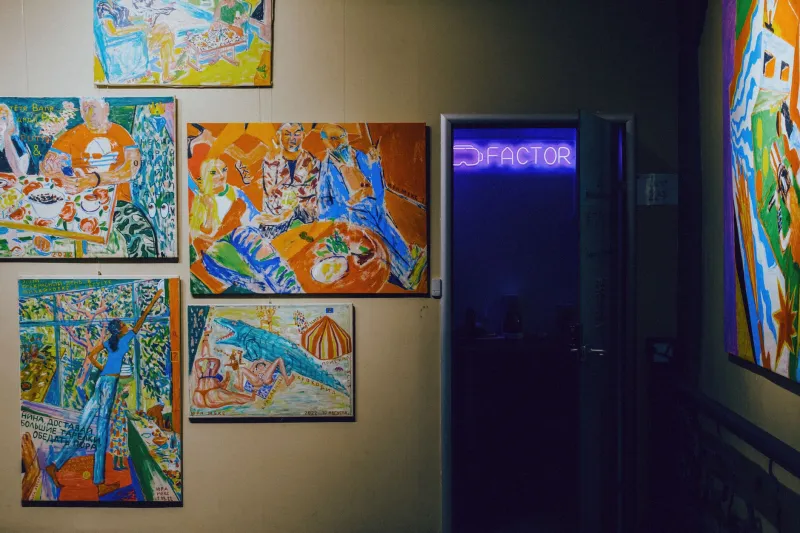
There's a warehouse somewhere in East Los Angeles. The address circulates through Signal threads and hand-written notes slipped inside record sleeves at certain vinyl shops. You don't find it by googling. You find it because someone who trusts you tells someone who trusts them, and eventually a stranger hands you a flyer printed in UV ink that only becomes readable under a black light. The show runs for exactly one weekend. There are no price tags on the walls. There is no gift shop.
This is not a novelty. This is infrastructure.
Across the United States—in repurposed factories in Detroit, converted garages in Austin, basement apartments in Brooklyn, and sprawling desert properties outside Taos—a network of underground psychedelic artists is producing work that the mainstream gallery system either can't process or actively refuses to touch. These aren't amateurs waiting for their big break. Many of them have been offered the big break and turned it down. The underground isn't a stepping stone. For a growing number of creators, it's the destination.
What the Institutions Won't Hang
To understand why this underground exists, you have to understand what gets filtered out at the institutional level. Major galleries and museums operate inside a web of donor relationships, board approval processes, insurance requirements, and PR concerns that effectively function as aesthetic censorship—even when nobody intends it that way.
Psychedelic art, by its nature, tends to push into territory that makes those systems nervous. Work that references altered states directly. Imagery that draws from Indigenous ceremonial traditions in ways that complicate ownership questions. Pieces that incorporate actual controlled substances into their physical construction. Art that's deliberately designed to induce disorientation or mild hallucination in viewers through optical techniques. Collaborative pieces with no single attributable author, which creates nightmares for provenance documentation.
None of this is illegal to look at. Some of it exists in legal gray areas around creation. All of it gets quietly sidelined when institutions are making acquisition decisions.
The underground absorbs what the mainstream rejects. And then it runs with it.
The Collective Model
One of the defining structural features of this scene is the collective. Unlike the lone-genius model that the art market loves to commodify, underground psychedelic art communities tend to operate as loose federations of collaborators. Membership is informal. Roles shift. A painter from one city might contribute to a muralist's project in another without ever meeting in person, coordinating through shared digital canvases and mailed physical elements.
These collectives often develop their own internal visual languages—recurring symbols, color systems, and compositional rules that create coherence across wildly different individual styles. From the outside, it can look like a movement. From the inside, it feels more like a conversation that's been going on for years and keeps getting stranger and more interesting.
The lack of formal structure is a feature, not a bug. There's no collective to sue. There's no LLC to serve with a cease and desist. When the work lives in the distributed minds of fifty artists across twelve states, it becomes genuinely difficult to suppress.
Pop-Ups, Parties, and the Exhibition as Event
The underground has also developed its own exhibition format, and it looks almost nothing like a traditional gallery opening. The pop-up show is less a display mechanism and more a total environment—something closer to installation art crossed with a ritual gathering.
Attendees don't just look at work. They move through it. Sound design is built into the space. The lighting is considered as carefully as any element on the walls. In some shows, the sequence in which you encounter pieces is choreographed to produce a specific cumulative effect—a kind of narrative arc that only makes sense if you experience it in order. Docents, where they exist, are more likely to be the artists themselves than hired staff, which means conversations about the work can go places that a museum label never could.
The temporality is intentional, too. These shows don't run for three months. They run for a night, a weekend, maybe a week. The scarcity isn't manufactured hype—it's a philosophical statement about the relationship between art and time. You were there or you weren't. The experience doesn't get archived in a catalog.
The Private Collection Underground
Alongside the pop-up scene, a quieter network of private collectors has developed around underground psychedelic work. These aren't the hedge-fund trophy hunters who show up at Sotheby's. They're people who found their way into the scene through personal connection—friends of artists, veterans of the festival circuit, researchers in adjacent fields, therapists who work with psychedelic-assisted treatment and find themselves drawn to art that reflects the terrain their patients describe.
Collecting in this context operates on different logic. Price is often secondary or irrelevant. Work changes hands through trade, gift, and commission. Some pieces are acquired with explicit agreements that they'll never be publicly displayed or sold—held in private as a form of stewardship rather than investment. The collector as custodian rather than owner is a genuinely different relationship to the object.
This also means that some of the most significant psychedelic art being produced right now is essentially invisible to the public record. It exists in homes and studios and storage units, known only to small circles. Whether that's a tragedy or a feature of the work's integrity is a question the scene debates constantly.
Why This Matters Beyond the Scene
It would be easy to frame all of this as romantic outsider mythology—the noble underground resisting the corrupt mainstream. That's too simple and also kind of boring.
What's actually interesting is what the underground's existence reveals about the limits of institutional culture when it comes to psychedelic visual art specifically. The altered-states tradition in American art has always had an uneasy relationship with legitimacy. The work that defined the psychedelic aesthetic in the 1960s was produced largely outside institutional frameworks and became historically significant in spite of—or because of—that fact.
The current underground suggests that dynamic hasn't changed as much as the mainstream art world's occasional embrace of psychedelic imagery might imply. Hanging a colorful swirling canvas in a Chelsea gallery is not the same thing as engaging with what psychedelic art is actually trying to do. The underground knows the difference. It's betting that the difference matters.
For collectors, enthusiasts, and anyone who's ever felt like the art they really connect with exists just outside the frame of what's officially on offer—that bet looks increasingly solid. The velvet rope keeps a lot of people out. It also keeps a lot of the most alive, strange, and genuinely transformative work from ever getting in.
Somebody's got to hold the weird stuff. Might as well be the people who understand it.