Fake, Real, or Somewhere in Between: Surviving the Psychedelic Memorabilia Market
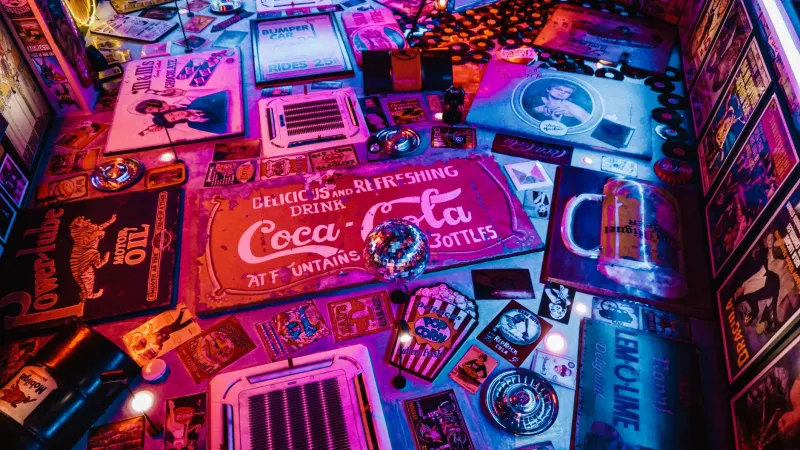
Somewhere in a climate-controlled storage unit outside of Portland, Oregon, there are approximately 400 concert posters rolled into archival tubes. Their owner — a retired graphic designer who asked to be called only Marcus — has spent the better part of three decades acquiring them. Some he bought for a few bucks at flea markets. Others cost him thousands at auction. A handful, he admits quietly, turned out to be reproductions he paid original prices for.
"The market has always been a little wild," Marcus says. "But in the last ten years? It's become something else entirely."
He's not wrong. The psychedelic memorabilia market — a sprawling, loosely regulated ecosystem of vintage concert posters, underground press publications, original album artwork, and counterculture ephemera — has exploded in both size and dollar value. And with that explosion has come a surge of forgeries, unauthorized reprints, and well-meaning sellers who genuinely have no idea whether what they're holding is a first printing or a third-generation copy made last Tuesday.
What Exactly Are We Talking About?
When collectors use the term "psychedelic memorabilia," they're typically referring to materials produced between roughly 1965 and 1975 — the golden era of the San Francisco ballroom scene, underground newspapers like The Berkeley Barb and East Village Other, and the broader counterculture that stitched itself together through hand-distributed print media and concert promotion.
The crown jewels of the category are the so-called "Big Five" San Francisco poster houses: Fillmore Auditorium posters published by Bill Graham, Avalon Ballroom prints by the Family Dog collective, and work from artists like Wes Wilson, Victor Moscoso, Rick Griffin, Alton Kelley, and Stanley Mouse. A legitimate first-edition Moscoso Fillmore poster in excellent condition can clear $2,000 to $5,000 at auction. Rarer pieces — a Griffin Grateful Dead handbill, an original Mouse Studios commission — have sold for significantly more.
But the market extends well beyond the famous stuff. Underground press issues, psychedelic mail-order catalogs, Black Light posters, and even original artwork from long-forgotten regional bands all have dedicated collector communities. And all of them have authenticity problems.
The Forgery Problem (And Why It's Complicated)
Here's the uncomfortable truth about the psychedelic memorabilia world: the line between "reproduction" and "forgery" is genuinely blurry, and it has been since basically the beginning.
Many of the most desirable posters from the Fillmore era were reprinted — sometimes officially, sometimes not — almost immediately after their original runs sold out. The Grateful Dead's own merchandising operation produced authorized reprints of several classic posters in the 1970s and 1980s. Other reprints were made by third parties who either didn't know or didn't care about the distinction. Some of those unauthorized copies are now themselves fifty years old, which raises its own philosophical questions about what "vintage" even means.
Dealers who specialize in this material have developed a toolkit of authentication methods: paper stock analysis, UV light examination to detect modern bleaching agents, printing technique assessment under magnification, and comparison against known originals in museum collections. But none of these methods are foolproof, and outside of a handful of auction houses with genuine expertise, most sellers are working from intuition and experience rather than scientific certainty.
"I've been doing this for twenty-two years and I still get burned occasionally," says one Chicago-based dealer who operates primarily through collector shows and private sales. "The really good fakes — the ones made by people who actually understand the source material — are incredibly difficult to spot without laboratory analysis. And nobody's sending a $300 poster to a lab."
How Prices Get Made
For buyers coming from more established collecting categories — fine art, coins, sports cards — the psychedelic memorabilia market can feel bewilderingly informal. There's no equivalent of the PSA grading system, no universally recognized price guide, and no central registry of known originals.
Prices are set through a combination of auction house records, dealer reputation, condition assessment, and frankly, vibes. A poster that surfaces at a Bay Area estate sale with a credible provenance story attached will command a premium over an identical-looking piece with no history. Signatures matter enormously — a Wes Wilson-signed print might be worth three to five times an unsigned equivalent — but signature authentication carries its own risks.
The underground press side of the market operates on slightly different logic. Condition is paramount (these were literally newspapers, and most copies were destroyed or degraded within years of publication), and completeness matters — a full run of a significant underground paper is worth dramatically more than individual issues. First issues of historically significant publications like The Oracle or The Realist are particularly sought after.
What's driving prices up across the board right now is a combination of Baby Boomer estate liquidations flooding the market with material, and a younger generation of buyers — many of them Gen Z and younger Millennials — who are approaching this stuff as both cultural artifact and investment asset. That collision of motivations is creating some genuinely strange market dynamics.
The Ethics Nobody Wants to Talk About
There's a tension sitting at the center of this entire market that most participants prefer to sidestep: the counterculture these objects came from was explicitly, militantly anti-commodity. The artists who made these posters were, in many cases, trying to build a world where art circulated freely, where concert promotion served community rather than commerce, where the underground press spoke truth to power rather than generating investment returns.
The fact that a Wes Wilson original now lives in a climate-controlled storage unit in Portland rather than on someone's wall — that it's an asset rather than a thing to be experienced — would have struck many of its original creators as a profound betrayal of the whole point.
Marcus, the collector in Portland, has thought about this a lot. "I justify it by telling myself I'm preserving things that would otherwise be lost," he says. "And that's genuinely true. A lot of this material would have been thrown away if people like me hadn't been paying attention. But I'm also aware that I'm turning someone else's radical politics into my hobby. That's real too."
For buyers navigating this market — whether you're hunting for a single piece to hang in your living room or building a serious collection — the psychedelic memorabilia world rewards patience, research, and a healthy skepticism toward sellers who seem too certain about anything. Get provenance documentation when you can. Learn to recognize printing techniques. Find dealers with reputations worth protecting.
And maybe, occasionally, remember that the people who made this stuff weren't trying to create investment vehicles. They were trying to change the world. Whether they succeeded is a different conversation — but it's probably worth having while you're deciding what to pay for their work.