Healing in Half-Doses: How Microdosing Is Quietly Rewriting America's Wellness Playbook
There's a moment in a lot of wellness conversations these days where someone lowers their voice just slightly — not out of shame, exactly, but out of habit — and says something like, "I've actually been microdosing." And then, more often than not, the person they're talking to nods and says, "Me too."
This is where America's relationship with psychedelics is right now: not underground, not fully mainstream, but somewhere in between — whispered about at farmers markets, debated in integrative medicine circles, and quietly practiced by a growing number of people who would describe themselves as wellness-oriented rather than countercultural.
The psychedelic renaissance isn't just happening in clinical trials or on the pages of The New York Times. It's happening in living rooms in Denver, community centers in Portland, and holistic health practices in Austin. And it's reshaping what wellness even looks like.
What Microdosing Actually Means (And What It Doesn't)
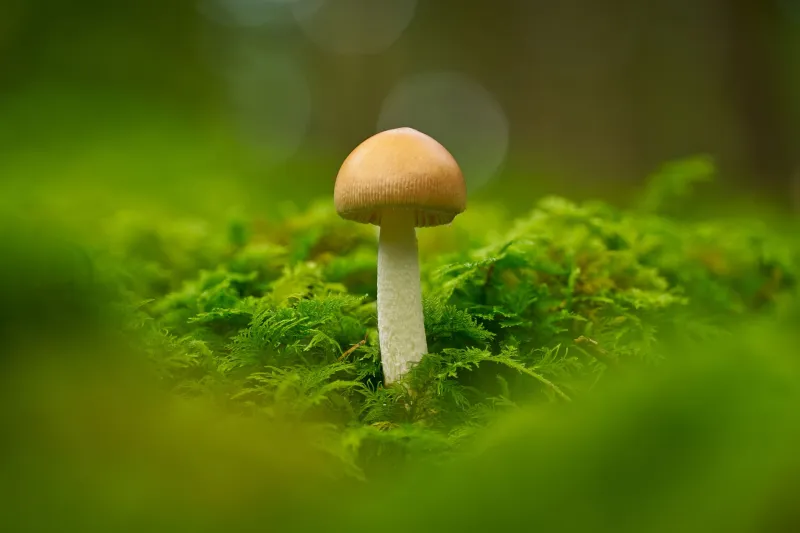
Let's be clear about what we're talking about. Microdosing typically means consuming a sub-perceptual amount of a psychedelic substance — most commonly psilocybin mushrooms or LSD — on a structured schedule. We're talking doses small enough that you're not tripping, not hallucinating, not seeing geometric fractals bloom across your kitchen ceiling. The goal, for most people, is subtler: sharper focus, emotional steadiness, a kind of creative ease that feels just slightly beyond ordinary reach.
Dr. James Fadiman, a psychologist who's been studying microdosing since before it was a buzzword, helped popularize the concept with his 2011 book The Psychedelic Explorer's Guide. Since then, the practice has exploded in visibility — partly due to Silicon Valley productivity culture adopting it, and partly because the broader cultural conversation around mental health has cracked open enough to let these ideas through.
But the wellness community's embrace of microdosing is something different from the tech-bro optimization narrative. It's more emotional, more communal, and more rooted in the idea that healing is a collective process.
Community as the Container
In cities like Boulder, Asheville, and the Bay Area, informal microdosing circles have become a real thing — groups of people who gather regularly to share experiences, set intentions, and support each other through what can be genuinely transformative (and sometimes challenging) processes.
Sarah, a somatic therapist based in Asheville, North Carolina, has been facilitating one such group for about two years. She's careful about language — legally careful, she clarifies — but describes the gatherings as "integration circles" focused on helping participants make sense of their inner experiences.
"What I'm seeing is people coming in with a lot of unprocessed grief, a lot of anxiety, a lot of disconnection from their own bodies," she says. "And microdosing, for some of them, has opened a door. It's not the whole journey. But it's made them more available to the work."
This framing — psychedelics as a tool for emotional availability rather than a destination — is central to how the wellness world is absorbing microdosing culture. It's less about the substance and more about what the substance makes possible: deeper therapy sessions, more honest conversations, a softening of the psychological armor a lot of us walk around in.
Navigating the Legal Gray Zone
Here's the part nobody can ignore: in most of the United States, psilocybin mushrooms remain a Schedule I controlled substance. Oregon and Colorado have moved toward regulated therapeutic frameworks, and a handful of cities have decriminalized possession, but for the vast majority of Americans, microdosing exists in legally murky territory.
This creates a strange tension in the wellness community. Practitioners who work with clients exploring psychedelics have to be careful about how they discuss it, let alone endorse it. Retreat centers operating in the US often pivot to ketamine — which is legal for medical use — as a more accessible entry point, while pointing curious clients toward Jamaica or the Netherlands for psilocybin experiences.
Marcus, a licensed counselor in Denver who incorporates ketamine-assisted therapy into his practice, sees the legal landscape as both a barrier and, oddly, a protective force. "When something is slightly outside the mainstream, the people drawn to it tend to be more intentional about it," he says. "There's a self-selection toward seriousness. That's not always true, but it's been true in my experience."
How This Moment Is Different From the '60s
It's tempting to draw a straight line from Woodstock to your neighbor's microdosing journal, but the cultural context couldn't be more different. The psychedelic movement of the 1960s was explicitly political, explicitly disruptive — a rejection of mainstream values that came packaged with a whole aesthetic universe of swirling colors, protest music, and communal living.
Today's microdosing culture is, in many ways, the opposite of disruptive on the surface. It's integrationist. People aren't dropping out; they're trying to show up better — for their jobs, their relationships, their therapy appointments. The aesthetic is less Day-Glo poster and more clean-lined wellness app.
But don't mistake the quieter packaging for a lack of radicalism. The underlying proposition — that consciousness itself is worth exploring, that mental health is more than symptom management, that there are forms of healing Western medicine has barely touched — is genuinely subversive. It challenges pharmaceutical industry dominance, it questions the productivity-above-all-else grind, and it insists that inner life matters.
"The revolution is internal this time," says cultural observer and writer Danielle Torres, who covers psychedelic culture for several alternative publications. "Which doesn't mean it's less real. It might mean it's more durable."
What Comes Next
As clinical research continues to accumulate — studies from Johns Hopkins, NYU, and Imperial College London consistently showing promising results for psilocybin in treating depression, PTSD, and end-of-life anxiety — the cultural momentum is only building. More states are likely to follow Oregon and Colorado's lead. More therapists are getting trained in psychedelic-assisted modalities. More people are having that slightly-lowered-voice conversation at the farmers market.
For the wellness community, the question isn't really whether psychedelics will become part of mainstream healing culture. That ship has sailed. The question is what kind of culture gets built around them — whether it stays rooted in genuine healing, community, and accessibility, or whether it gets absorbed into the same expensive, exclusionary wellness industrial complex it was supposed to disrupt.
The people doing this work on the ground — the integration circle facilitators, the harm reduction advocates, the therapists quietly holding space — are aware of that risk. And most of them are determined to keep the heart of it intact.
One tiny, intentional dose at a time.


