Ceremony for Sale: The Dark Side of the Psychedelic Retreat Gold Rush
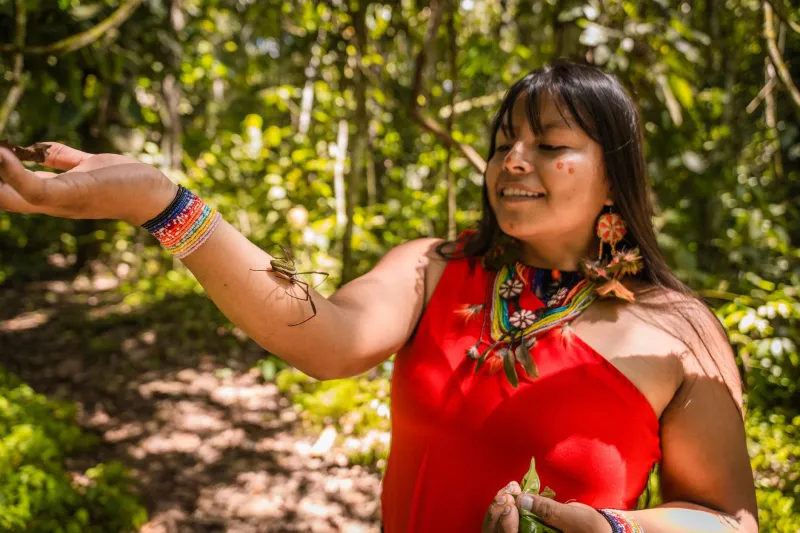
Picture this: a polished landing page, soft-focus jungle photography, and testimonials from Silicon Valley executives who found themselves crying in a Peruvian maloca and came out the other side with a new relationship to their trauma. The price tag? Somewhere between $3,000 and $10,000 for a week. Flights not included.
The psychedelic retreat industry is booming, and it's not subtle about it. From Oaxacan psilocybin ceremonies to Costa Rican ayahuasca lodges, a growing ecosystem of wellness companies is selling what they call transformative, authentic experiences to a very specific customer: the burned-out, spiritually curious American with a decent credit limit and a few weeks of PTO.
And look — there's nothing inherently wrong with wanting to expand your consciousness in a structured, supported setting. That impulse is real and, increasingly, backed by science. But when you start pulling back the curtain on how these experiences are marketed, packaged, and delivered, things get complicated fast.
The Authenticity Industrial Complex
The word "authentic" does a lot of heavy lifting in retreat marketing copy. Authentic ceremony. Authentic shamanic lineage. Authentic connection to the land. It's everywhere — and it's almost always doing the work of justifying a premium price point.
Here's the problem: authenticity isn't a product feature. You can't bolt it onto a service offering the way you add a spa package or airport transfers. Indigenous plant medicine traditions — whether we're talking about the Shipibo-Conibo people of the Amazon or the Mazatec healers of Oaxaca who shaped what we now call "magic mushroom" ceremony — developed over centuries within specific cultural, ecological, and spiritual frameworks. They weren't designed to be extracted, rebranded, and sold to people who learned about ayahuasca from a podcast.
When a retreat company in, say, Portland or Austin hires a facilitator who spent three weeks training in Peru and now leads ceremonies in a rented Airbnb, they're not offering you an authentic experience. They're offering you an aesthetic. And there's a massive difference.
Who's Actually in the Room?
Power dynamics inside commercial psychedelic retreats deserve way more attention than they get. You're talking about people in deeply vulnerable, ego-dissolved states — and someone in a position of authority guiding that experience. In legitimate traditional contexts, the healer's role is embedded in community accountability, years of rigorous apprenticeship, and cultural protocols that govern conduct.
In the commercial retreat world? Oversight is spotty at best. The US has no federal regulatory framework for psychedelic facilitation — and in the countries where these retreats operate legally, enforcement of participant protections is inconsistent. Reports of psychological harm, boundary violations, and outright abuse at retreat centers have surfaced with enough regularity that organizations like MAPS and the Chacruna Institute have developed safety guidelines specifically because the industry wasn't policing itself.
This isn't a reason to never attend a retreat. It's a reason to be extremely rigorous about who you trust with your nervous system.
The Environmental Tab Nobody's Talking About
Ayahuasca is made from two plants: the Banisteriopsis caapi vine and Psychotria viridis leaves. Demand from the global retreat industry has exploded so dramatically that wild populations of both are under strain in parts of the Amazon. Peyote — used ceremonially by Native American Church members for generations — is facing an extinction-level crisis, driven partly by non-Native demand that has turned a slow-growing cactus into a commodity.
Psilocybin mushrooms are more renewable, but the broader footprint of jungle retreats — deforestation for facility development, water use, waste management in ecologically sensitive areas — adds up. The irony of traveling thousands of miles to commune with nature while contributing to its degradation is not lost on everyone, but it doesn't seem to be slowing bookings down.
Cultural Extraction vs. Cultural Exchange
There's a version of engagement with plant medicine traditions that is respectful, reciprocal, and genuinely enriching for everyone involved. It looks like: seeking out facilitators from within the tradition who are choosing to share their knowledge on their own terms, paying fair wages that benefit indigenous communities directly, learning about the cultural context before and after the experience, and supporting indigenous-led advocacy efforts that protect both the plants and the peoples who steward them.
That version exists. Organizations like the Ethnobotanical Stewardship Council work to build ethical bridges between indigenous knowledge holders and the broader world. Some retreat operations are genuinely community-rooted, transparent about their practices, and committed to long-term ecological stewardship.
But they're not always the ones with the biggest Instagram presence or the slickest email funnels.
What Conscious Psychedelic Travel Actually Looks Like
If you're serious about pursuing a plant medicine experience abroad — not just the vibe of one — here's a rough framework for doing it with some integrity.
Research the lineage, not just the lodge. Who are the facilitators? What is their training background? Are they operating within or with the consent of the tradition they're drawing from? A beautiful facility with a vague "shamanic-inspired" description is a red flag.
Follow the money. Where does your fee actually go? Is any portion flowing back to indigenous communities or conservation efforts? Legit operations are usually transparent about this.
Check the safety protocols. Is there a medical screening process? What's the plan if something goes wrong? Responsible retreat operators have clear answers to these questions.
Do your pre-work. Showing up to a ceremony with no psychological preparation and expecting the medicine to sort you out is both disrespectful to the tradition and potentially dangerous for you. Reputable facilitators will require it.
Consider domestic options. Oregon legalized supervised psilocybin services in 2023. Colorado has its own evolving framework. The landscape for legal, regulated psychedelic experiences in the US is shifting — and supporting those efforts keeps money and accountability closer to home.
The Deeper Question
Ultimately, the psychedelic retreat industry is a mirror. It reflects back the same extractive logic that drives a lot of American consumer culture — the assumption that if you want something, you should be able to buy it, and that spending more means getting something more real.
But consciousness expansion doesn't work like that. Neither does cultural respect. The most transformative thing a prospective psychedelic traveler might do isn't book the priciest jungle package — it's sit with the discomfort of wanting something that isn't actually for sale, and figure out what it would mean to approach it differently.
That's not a great pitch for a landing page. But it might be the most honest thing anyone in this space can say.