Dead Stock Dreams: Why Gen Z Is Hunting Down Psychedelic Relics From an Era They Never Lived
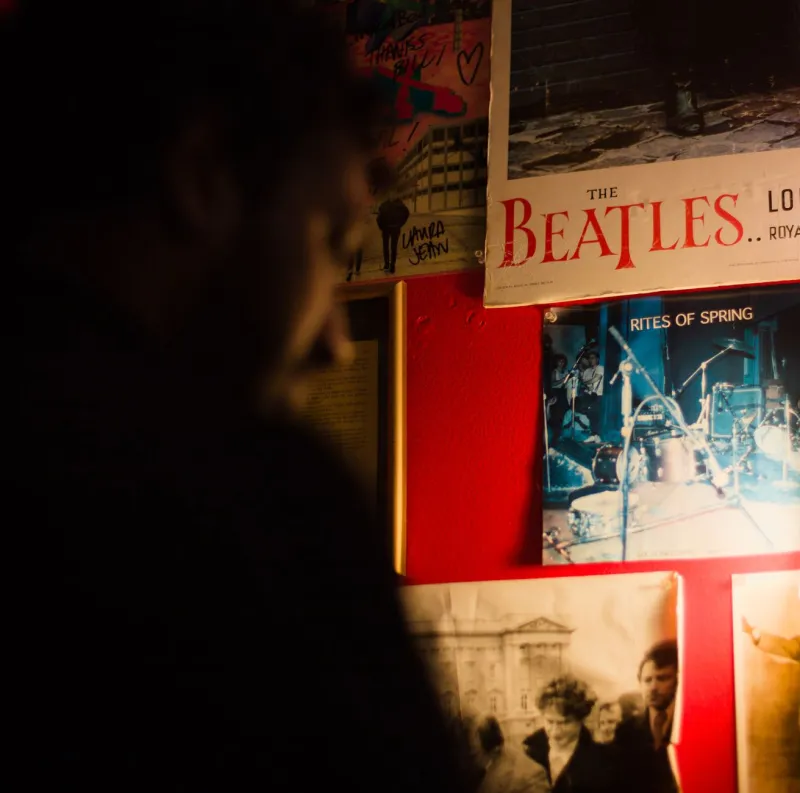
Scroll through any serious vintage resale platform right now — Depop, eBay, Etsy's collector rabbit holes — and you'll notice something interesting. The most aggressively sought-after psychedelic merchandise isn't new. It's not a modern artist's limited-edition drop or a freshly screen-printed festival tee. It's a water-stained 1971 Fillmore West poster. It's a faded, cracked-ink Grateful Dead shirt with a neck tag that crumbles when you touch it. It's a blacklight velvet poster of a mushroom landscape that's been rolled and unrolled so many times the edges have gone soft.
And the person buying it, more often than not, was born sometime around 2001.
Gen Z's obsession with vintage psychedelic merchandise is real, it's growing, and it raises some genuinely fascinating questions about authenticity, nostalgia, cultural inheritance, and what it means to connect with a movement you experienced entirely secondhand — through your parents' record collections, through documentaries, through the algorithm.
The Hunt Is the Point
Ask any young collector what they love about hunting vintage psychedelic pieces and they'll almost always describe the process before the product. The thrill of finding an original Rick Griffin poster at a Portland estate sale. The satisfaction of identifying a genuine vintage Wes Wilson print versus a 1990s reproduction by knowing which printing house's paper stock to look for. The community of Discord servers and Reddit threads where people argue passionately about whether a particular Grateful Dead tee is actually from 1973 or a very convincing 1985 reprint.
Jordan, a 22-year-old graphic design student in Chicago, has been collecting psychedelic concert posters since they were 17. Their apartment walls are a careful archive of original Fillmore and Avalon Ballroom prints, most sourced through years of patient eBay watching and a few lucky thrift store finds.
"There's something about holding something that was actually there," Jordan says. "Like, this poster was on a telephone pole in San Francisco in 1967. Someone tore it down and kept it. That's a physical connection to something that actually happened. You can't replicate that."
This tactile, almost spiritual relationship with provenance is central to how serious collectors think about their pieces. Reproductions — even excellent ones — don't carry the same weight. The object isn't just decorative; it's a kind of time travel.
The Authenticity Wars
Of course, not everyone in the vintage psychedelic community agrees on what "authentic" even means, and the debates can get surprisingly heated.
On one side are the purists — collectors who insist that only original pressings, original prints, and original garments carry genuine cultural value. For them, a modern reproduction of a Victor Moscoso poster, no matter how faithful, is essentially a lie. It's cosplay, not culture.
On the other side are what you might call the pragmatists, who argue that the aesthetic and the spirit matter more than the paper or the ink. That a high-quality reissue of a classic Avalon Ballroom poster, hung in a teenager's bedroom in 2024, is continuing a visual tradition rather than cheapening it. That gatekeeping authenticity is just another way of making counterculture expensive and exclusive.
This debate mirrors larger conversations happening across vintage fashion and music collecting, but it feels especially charged in psychedelic spaces, where the whole philosophical tradition is supposedly about dissolving boundaries and rejecting hierarchies. There's an irony in watching collectors argue fiercely about who gets to own the real version of a poster designed to be plastered on walls for free.
Mia, a 25-year-old vintage reseller based in Los Angeles, sits somewhere in the middle. She sells both originals and quality reproductions, clearly labeled, and says the market for each is completely different. "The people buying originals are collectors. They care about investment, about history, about having the real thing. The people buying reproductions are decorators, enthusiasts, people who just love the visual language. Both are valid. They're just different relationships with the same art."
Nostalgia for a Place You've Never Been
Psychologists have a term for this phenomenon: historical nostalgia, sometimes called vicarious nostalgia — a longing for an era one has no personal memory of, typically fueled by cultural mythology, family stories, and media representations.
For Gen Z, the 1960s and '70s psychedelic moment carries enormous mythological weight. It's been romanticized through decades of documentaries, biopics, record reissues, and the general cultural tendency to treat that era as the last time young people really changed something. In a world that often feels like it's careening toward disaster with the steering wheel locked, the idea of a generation that genuinely believed it could reshape consciousness and society from the ground up is intoxicating.
The merchandise is a portal into that mythology. Wearing a vintage Haight-Ashbury tee or hanging an original Wes Wilson print isn't just an aesthetic choice — it's an act of identification. A way of saying: I align with something that felt real and alive and transformative, even if I got here late.
"My generation grew up being told that everything is ironic, everything is a brand, everything is content," says Torres, a cultural critic who has written extensively about Gen Z and counterculture. "Psychedelic culture from the '60s feels like the opposite of that. It feels sincere. It feels like people actually meant it. Whether that's historically accurate is almost beside the point — the myth is what's doing the work."
How Vintage Obsession Is Reshaping New Psychedelic Design
Here's where it gets creatively interesting: the Gen Z appetite for vintage psychedelic aesthetics isn't just driving secondhand markets. It's actively influencing what new psychedelic art and merchandise looks like.
A new generation of designers and artists — many of them deeply fluent in the visual language of '60s poster art — are creating work that's in genuine conversation with that tradition rather than simply imitating it. They're using original typefaces, hand-lettering techniques, and color palettes rooted in the era's offset printing limitations, but filtering them through contemporary sensibilities and concerns.
The result is a psychedelic visual culture that feels simultaneously vintage and urgent. It's not nostalgia as escapism; it's nostalgia as a design toolkit for building something new.
At Psychedelic Made, we see this every day in the work coming through our doors — artists who grew up obsessing over original Fillmore posters and are now making pieces that honor that lineage while pushing it somewhere genuinely their own. The thread between 1967 and 2024 is alive and pulling in both directions.
What the Obsession Is Really About
Maybe the deepest thing driving Gen Z toward vintage psychedelic culture isn't nostalgia at all — or at least not only nostalgia. It's a search for evidence that transformation is possible. That aesthetics can carry real meaning. That a visual language can be tied to genuine values rather than just vibes.
In a cultural moment saturated with fast fashion, AI-generated imagery, and algorithmic trend cycles that last approximately three weeks, something that was made with intention — a poster hand-lettered by an artist who believed in what it was advertising, printed on a press that required real craft — feels almost radical.
The vintage psychedelic marketplace is booming because young people are hungry for something that feels like it actually came from somewhere. Whether they find that in a crumbling original or a well-made reproduction, the impulse behind the search is the same.
And honestly? That impulse is pretty psychedelic in itself.


